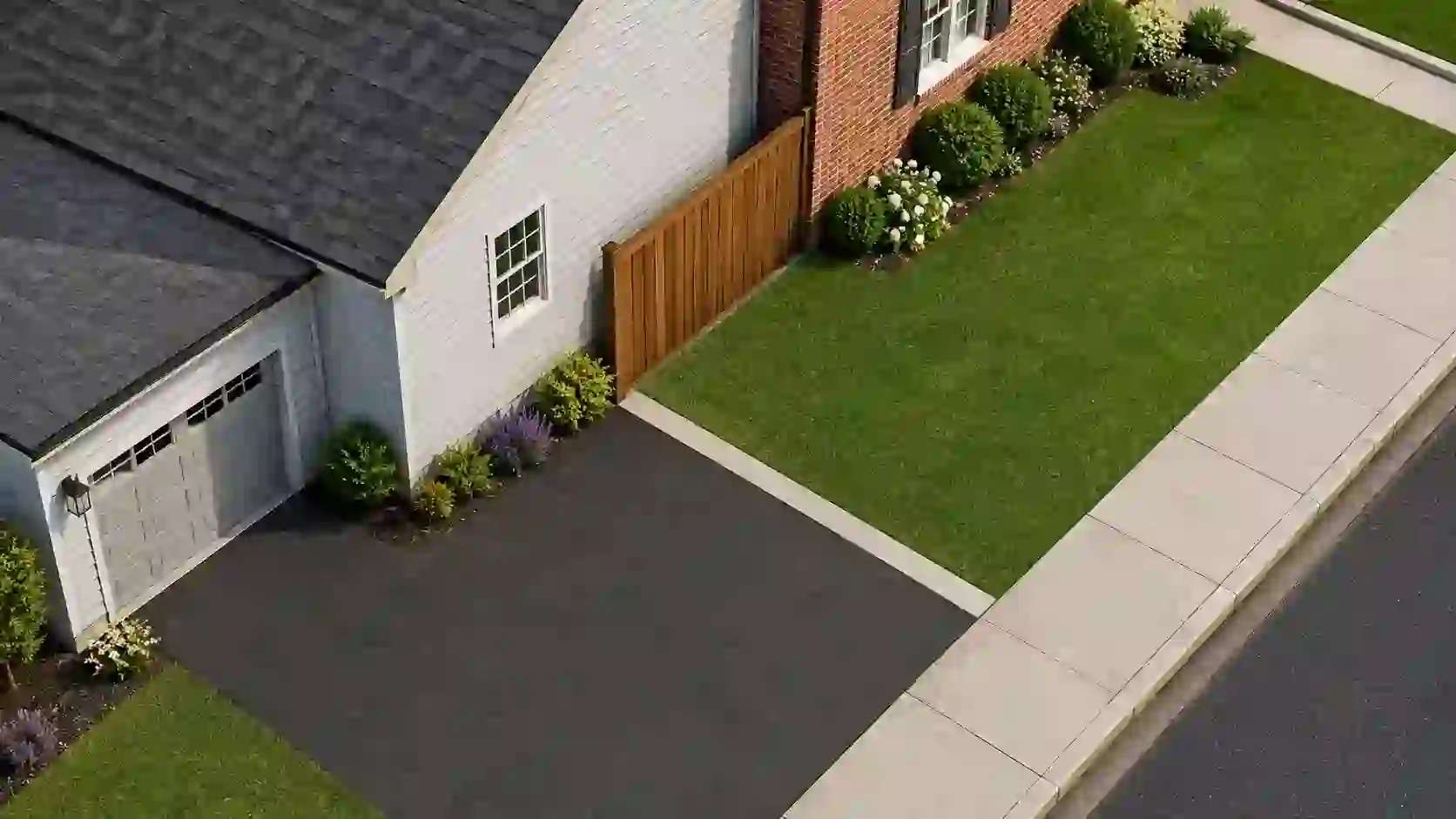
By Johnathan Reed, Real Estate Attorney & Language Specialist
Confused by the word “abut” in a property deed or architectural plan? Misreading this single term can spark boundary fights and legal headaches. Ignoring the precise abut meaning could cost you thousands. Here, you’ll gain a crystal-clear understanding of what abut means, with real examples, legal context, and simple comparisons — so you never second-guess a contract again.
1. What Does Abut Mean? A Straightforward Definition
Abut meaning centers on direct physical contact. As a verb, abut describes something that touches or shares a common boundary with something else. You use “abut” when two objects, buildings, or parcels of land meet right at their edges.
Merriam-Webster defines abut as “to touch along a border or with a projecting part.” Oxford Learner’s Dictionaries adds “to be next to something or to have a common boundary.” In everyday terms, if your driveway ends exactly where your neighbor’s fence begins, your driveway abuts that fence.
The abut meaning always implies closeness that leaves no gap. It is not about being near, nearby, or in the same neighborhood. The touch must be edge-to-edge or end-to-end. This clarity matters deeply when you read legal documents, construction plans, or real estate listings.
2. Tracing the Origin of the Word Abut
Abut entered English through Old French abouter, formed from *a-* (to) and bout (end). The original image was of two things joining end to end. Middle English adopted it as abutten, preserving that sharp sense of boundary contact.
Knowing this history reinforces the modern abut meaning: two entities meet exactly where their boundaries end. There is no overlap, no gap, just a clean line of contact. This etymological root helps you remember that abut demands touching, not just neighboring.
3. Abut in Real Estate: Boundaries, Easements, and Legal Descriptions
In real estate, abut meaning becomes a powerful legal tool. Deeds, title reports, and easement agreements routinely use “abut” to define which properties share a property line. When a legal description states “the parcel abuts County Road 12,” it declares that your land physically touches the public right-of-way.
Black’s Law Dictionary defines abut as “to reach; to touch; to border upon; to be contiguous to.” This definition carries weight in courtrooms. A property that abuts a road often gains automatic access rights, even if no driveway currently exists. If your deed says your lot abuts a lake, you likely hold riparian rights — the right to use the water.
Misunderstanding the abut meaning in a purchase contract can lead to expensive mistakes. For example:
- You assume you have lake access because your property “borders” the water, but the deed says your land abuts a private strip owned by someone else. You own no direct contact with the lake.
- A builder reads “abuts utility easement” and builds over it, triggering a removal order.
Always interpret “abut” in real estate as a binding statement of physical contact. Cornell Law School’s Legal Information Institute recognizes an “abutting owner” as one whose property touches a highway or public land, a status that affects liability and maintenance duties.
4. Abut in Architecture: When Buildings Touch or Share Walls
Architecture and construction rely on the abut meaning to describe structures that meet. Townhouses often abut one another, sharing a common wall called a party wall. Zero-lot-line homes deliberately abut the property boundary to maximize interior space. In commercial projects, a new addition may abut an existing warehouse.
When two buildings abut, building codes demand fire-rated walls, precise sealing, and structural independence. An architect specifying “the deck will abut the house at the kitchen door” instructs builders to create a flush, gap-free connection. Here, abut meaning prevents water intrusion and ensures a seamless walking surface.
Remember: in a building context, abutting elements touch directly. No air gap exists. That contact changes how you handle flashing, insulation, and expansion joints.
5. Abut vs. Adjoin: Know the Crucial Difference
Many people treat abut and adjoin as identical, but the abut meaning carries a stricter requirement. Adjoin can describe things that are simply next to each other, with or without touching. Abut requires contact along a boundary.
Consider two stores in a strip mall. They adjoin if they share a wall; they also adjoin if a narrow alley separates them. They abut only if their walls physically meet. This distinction alters insurance responsibilities, maintenance obligations, and legal descriptions.
| Term | Definition | Physical Contact Required? | Typical Usage |
|---|---|---|---|
| Abut | Touch directly along a boundary or edge | Yes | Deeds, legal descriptions, architecture |
| Adjoin | Be next to or attached, with or without contact | Not necessarily | General description, zoning |
| Border | Lie along the edge of something, often with a dividing line | Not necessarily | Geographic, decorative contexts |
This table sharpens your grasp of abut meaning and helps you choose the right word in contracts, reports, and everyday conversation.
6. Abut vs. Border: When to Use Each Term
“Border” suggests a line of separation, while abut emphasizes the meeting of edges. A river may border a farm, acting as the dividing line, but the farm’s field abuts the riverbank only if it touches the water’s edge. A picture frame borders a photo; the glass abuts the frame.
Using “border” when you mean “abut” weakens a legal document. A clause that says “the parcel borders the conservation area” might fail to prove direct access. Replacing it with “abuts” captures the exact abut meaning and removes doubt.
7. Clear Sentence Examples Using Abut Correctly
Seeing the abut meaning in action makes it stick. These active-voice examples cover everyday, legal, and architectural contexts:
- The shed abuts the back fence, leaving no room for a walkway.
- Her patio abuts the golf course, offering unobstructed views.
- The new garage will abut the existing kitchen wall.
- Your property abuts a state highway, so you need a permit for any driveway changes.
- The balcony abuts the neighbor’s airspace, creating a privacy concern.
- Two wildlife reserves abut at the ridge line, forming one large protected zone.
Each sentence shows direct contact. No gaps, no mere nearness.
8. Common Idioms and Phrases Involving Abut
While idioms with “abut” are rare, the phrase “abut on” or “abut upon” appears in formal English. It can mean to verge on something figuratively. For example, “His enthusiasm abuts on obsession.” The figurative abut meaning still conveys touching a boundary — here, the boundary between passion and excess.
You might also encounter “abutting owner” in property law and insurance policies, referring to the person whose land physically touches another’s. Understanding this term protects your interests when dealing with fence disputes or shared driveways.
9. Synonyms and Antonyms for Abut
Synonyms offer nuance, but none perfectly replace the exact abut meaning. Here are common alternatives and their shades:
Synonyms:
- Adjoin (may or may not include contact)
- Border (often implies a separating line)
- Touch (general contact, not always at boundaries)
- Meet (connects at a point or line)
- Neighbor (being next to, informal)
Antonyms:
- Separate
- Divide
- Detach
- Isolate
When precision matters, stick with “abut.” It does the legal and physical work that softer synonyms cannot.
10. Why Understanding Abut Meaning Can Protect Your Property Rights
Grasping the abut meaning goes beyond vocabulary. It directly affects your legal standing. If your deed states your lot abuts a public street, you hold an access right that no neighbor can block. If a survey reveals your garage abuts the property line, you may face setback violations unless an easement exists.
The American Bar Association’s property law resources note that abutting owners often share obligations for boundary maintenance and snow removal along public ways. Misreading this single word can lead to encroachment lawsuits, title defects, and reduced home value.
Action step: Pull out your property’s legal description right now. Find every instance of “abut,” “abutting,” or “abuts.” Circle them. Confirm you share a true boundary with each listed feature. If you spot any confusion, consult a licensed real estate attorney to review your rights and restrictions.
11. Frequently Asked Questions About Abut Meaning
What is the simple abut meaning in everyday language?
The simple abut meaning is that two things touch directly at their edges or boundaries. A fence abuts the sidewalk if no grass strip separates them.
How does the abut meaning differ from “adjacent”?
“Adjacent” means nearby or next to, but not necessarily touching. The abut meaning demands physical contact. Two rooms can be adjacent with a hallway between them, but they abut only if they share a wall.
Does the abut meaning change in a legal contract?
No. In legal documents, the abut meaning remains strict: physical contact along a boundary. Courts interpret “abut” as requiring actual touching, which affects property rights, access, and liabilities.
Can two properties abut without sharing a visible boundary line?
The abut meaning focuses on legal boundaries, not visible markers. Two lots can abut even if no fence or hedge marks the line. A survey confirms the contact.
Why is understanding the abut meaning critical for homeowners?
Homeowners who ignore the abut meaning risk building over property lines, losing access rights, or facing lawsuits. Knowing whether your land abuts a road, utility easement, or neighbor’s parcel helps you avoid costly mistakes.
How do I use “abut” in a sentence to show the abut meaning clearly?
Place the subject and object so they meet at a boundary: “The deck abuts the seawall.” This sentence communicates direct, edge-to-edge contact, which captures the true abut meaning.
Your Next Step: Own the Abut Meaning with Confidence
You now have a complete, practical understanding of abut meaning — from plain-language definition to legal power. This single word shapes property rights, construction integrity, and everyday clarity. Print this guide. Save the link. The next time you review a deed, plan a home addition, or settle a boundary question, return to these examples and comparisons. Share this resource with a neighbor or family member who is buying property. And if you discover unclear boundary language, reach out to a qualified real estate attorney. Your property is worth the precision.
About the Author: Johnathan Reed is a licensed real estate attorney and language consultant with over 15 years of experience drafting and interpreting property deeds, easements, and boundary agreements. His work helps homeowners and investors read legal documents with absolute confidence.