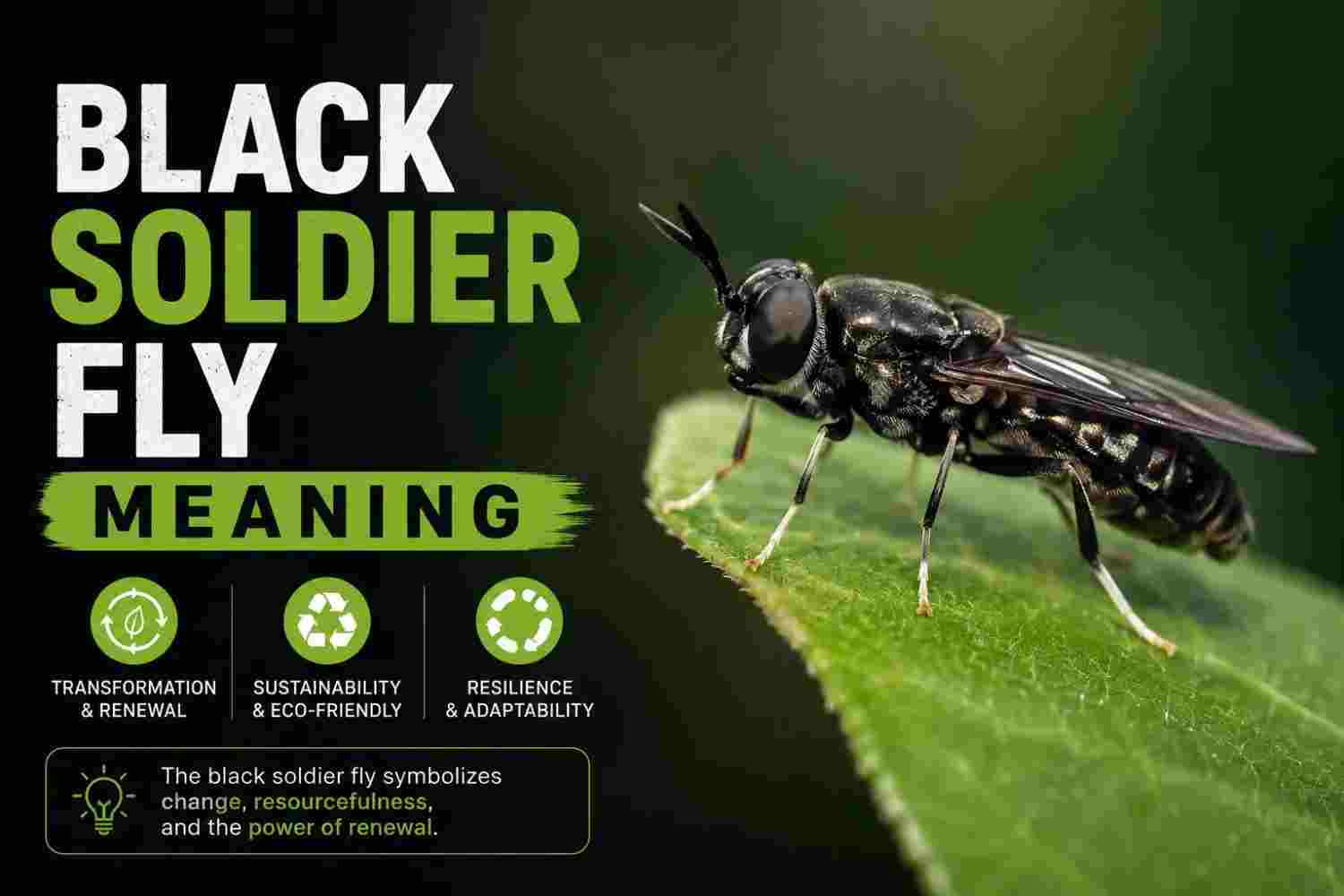
Finding insect larvae in compost or farm bed waste often causes concern. However, discovering these specific flat, segmented grubs usually indicates a healthy ecosystem. Understanding the black soldier fly meaning helps convert organic waste into sustainable protein and rich soil nutrients.
This guide covers the biological significance, life stages, and practical applications of Hermetia illucens.
1. What Is the Core Black Soldier Fly Meaning?
The term “black soldier fly” refers to Hermetia illucens, a non-pest fly species native to the Americas that has spread to tropical and temperate zones worldwide. Unlike houseflies, adult black soldier flies do not bite, sting, or transmit diseases to humans.
In ecological and agricultural terms, the black soldier fly meaning centers on rapid bioconversion. Their larvae feed aggressively on organic waste, transforming decaying matter into valuable insect protein and nutrient-rich fertilizer known as frass.
2. Taxonomic Classification and Biological Profile
To understand what Hermetia illucens represents in science, examine its classification:
| Attribute | Details |
| Scientific Name | Hermetia illucens |
| Family | Stratiomyidae (Soldier Flies) |
| Order | Diptera (Two-winged flies) |
| Primary Food Stage | Larval stage only (voracious feeders) |
| Adult Feeding | Non-feeding (relies on stored fat reserves; drinks water) |
| Main Output | High-protein prepupae, high-fat meal, and organic frass |
3. The 4 Stages of the Black Soldier Fly Life Cycle
The biological lifecycle of the insect shapes the practical black soldier fly meaning for commercial breeding and backyard composting.
+-------------------+      +-------------------+
|      1. Egg       | ---> |     2. Larva      |
| (3-4 days to hatch|      | (14-21 days eating|
+-------------------+      +-------------------+
                                     |
                                     v
+-------------------+      +-------------------+
|     4. Adult      | <--- |    3. Prepupa     |
| (5-8 days, breeds)|      | (Crawls to pupate)|
+-------------------+      +-------------------+
- Egg Stage: Females deposit batches of 500+ eggs in dry crevices near decomposing organic matter. Hatching occurs within 3 to 4 days.
- Larval Stage: The active feeding phase lasts 14 to 21 days. Larvae consume manure, food scraps, and agricultural byproducts, expanding in size rapidly.
- Prepupa Stage: Larvae stop eating, turn dark brown, and use a specialized mouthpart to crawl out of wet waste toward a dry pupation site.
- Adult Stage: Adults emerge after 7 to 10 days. Lacking functional mouthparts for eating, they focus entirely on mating during their 5 to 8-day lifespan.
4. Ecological Importance and Waste Reduction Capabilities
The broader ecological black soldier fly meaning lies in its capacity to handle organic waste streams without creating public health hazards.
- Rapid Decomposition: Larvae consume up to twice their body weight daily in food waste, sewage sludge, and animal manure.
- Pathogen Suppression: Research supported by the Food and Agriculture Organization (FAO) highlights that BSF larvae significantly reduce pathogens like Salmonella enterica and Escherichia coli in compost beds.
- Odour Elimination: By aerating wet waste and eating rapidly, larvae stop anaerobic fermentation, removing foul smells from waste bins.
5. Nutritional Value of Black Soldier Fly Larvae
The commercial black soldier fly meaning focuses on animal nutrition. These larvae convert low-value waste into balanced animal feed components.
- Crude Protein: Contains 40% to 44% protein rich in essential amino acids like methionine and lysine.
- Healthy Fats: Contains 28% to 35% lipids, featuring high levels of lauric acid known for antimicrobial benefits in young livestock.
- Essential Minerals: High in calcium (up to 5% dry matter) and phosphorus, making them an ideal feed additive for poultry and reptile diets.
6. Black Soldier Fly Larvae vs. Housefly: Key Differences
Understanding the true black soldier fly meaning requires distinguishing them from common houseflies (Musca domestica).
- Vector Status: Houseflies land on food and regurgitate digestive fluids, spreading diseases. Black soldier flies do not visit human food or carry pathogens.
- Adult Mouthparts: Houseflies have sponge-like mouthparts to feed constantly; adult BSF lack functional mouthparts and drink only water.
- Habitat Preference: BSF larvae outcompete housefly maggots in compost bins, suppressing housefly populations in farming facilities.
7. How Black Soldier Fly Frass Boosts Soil Health
Processing waste with larvae yields a residue called frass—a mixture of insect excrement, shed exoskeletons, and residual substrate.
- Natural Fertilizer: Offers a balanced N-P-K (Nitrogen, Phosphorus, Potassium) ratio suitable for organic crop cultivation.
- Chitin Content: Shed larval skins contain chitin, which triggers plant defense systems and builds resistance against soil-borne pests and fungi.
- Microbial Activity: According to researchers at NC State Extension, chitin-rich insect frass stimulates beneficial soil microbes that convert organic nutrients into plant-available forms.
8. Commercial Applications in Aquaculture and Poultry
Rising costs for fishmeal and soybean meal have increased the economic black soldier fly meaning across global livestock markets.
- Aquaculture Feed: BSF meal directly replaces wild-caught fishmeal in diets for rainbow trout, Atlantic salmon, and tilapia without slowing growth rates.
- Poultry Farming: Feeding live or dried larvae to laying hens improves eggshell thickness and supports natural foraging behaviors.
- Pet Food Industry: Hypoallergenic BSF protein provides a sustainable base for dog and cat kibble formulations.
9. How to Attract or Farm Black Soldier Flies at Home
Starting a backyard colony converts kitchen scraps into chicken feed and garden fertilizer:
- Select a Container: Use a specialized compost bin or DIY plastic tote fitted with exit ramps for self-harvesting prepupae.
- Balance Moisture Levels: Maintain substrate moisture around 60% to 70%—moist to the touch, but not waterlogged.
- Add Appropriate Substrate: Feed coffee grounds, fruit peels, vegetable scraps, and grain residues. Avoid excess meat or dairy to prevent odors before larvae establish.
- Provide Warm Temperatures: Maintain temperatures between 25°C and 32°C (77°F to 90°F) for optimal feeding and breeding rates.
10. Environmental Impact and Carbon Footprint Reduction
Replacing traditional feed ingredients with BSF larvae yields measurable sustainability benefits:
- Land and Water Conservation: Producing 1 kg of BSF protein uses a fraction of the land and water required for soy or livestock feed.
- Methane Mitigation: Diverting food waste to aerobic insect digestion reduces methane production in anaerobic municipal landfills.
- Circular Bioeconomy: Converting local food waste into local protein creates closed-loop agricultural systems, as documented by environmental researchers at USDA ARS.
Frequently Asked Questions
What is the black soldier fly meaning in composting?
In composting, the black soldier fly meaning refers to using Hermetia illucens larvae to break down organic waste faster than traditional earthworms or microbes can manage.
Do adult black soldier flies bite or sting humans?
No. Adult black soldier flies lack mouthparts for biting and do not possess stings. They are harmless to humans, pets, and crops.
Can you feed live black soldier fly larvae to chickens?
Yes. Live larvae supply protein, calcium, and fats that support feather growth, egg production, and natural foraging habits in poultry.
Why are black soldier flies considered beneficial insects?
They process organic waste quickly, suppress nuisance houseflies, control pathogens in waste, and produce protein for livestock feed along with organic fertilizer.
How do I identify black soldier fly larvae in my compost?
Look for segmented, cream-to-dark-brown grubs with a firm texture and a slightly flattened shape. They move actively through moist organic matter.
What do adult black soldier flies eat?
Adult black soldier flies do not eat solid food. They rely entirely on fat stored during their larval stage and drink water to stay hydrated.
Take Action: Integrate Black Soldier Flies into Your Waste Management
Understanding the full black soldier fly meaning shows how this harmless insect transforms waste handling. Whether running a commercial farm or managing a backyard bin, using Hermetia illucens lowers feed costs, cuts landfill waste, and builds healthier soil naturally.
Start your BSF bin today or incorporate insect meal into your animal feed to support sustainable agriculture!