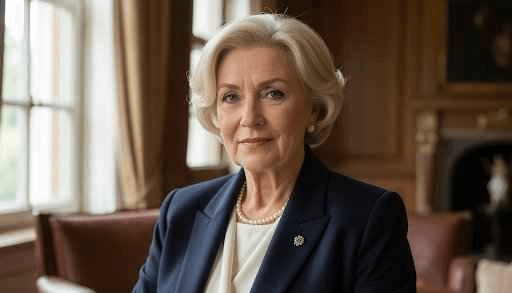
You recognize her face. You have felt the quiet force she brings to a scene. Yet many film lovers miss the full depth of Nathalie Baye’s five-decade reign over French cinema. She built a career without loud scandals or desperate bids for Hollywood. She simply delivered one masterful performance after another. This guide pulls back the curtain on every vital chapter, every unforgettable role, and every reason her name demands a top spot in your watchlist.
Who Is Nathalie Baye? Early Roots and an Artistic Awakening
On July 6, 1948, Nathalie Baye was born in Mainneville, Normandy. She grew up far from the glitter of Paris, surrounded by books and music. Her parents ran a café, but art pulled her toward the stage. At 17 she left Normandy to study dance and drama at the Conservatoire de Paris. Ballet gave her precision; theater gave her voice. Her early training at the prestigious CNSAD sharpened her into an actress who could say everything with a single glance.
She took small television roles in the early 1970s, cutting her teeth on the screen. Directors noticed her fresh, unforced presence. The young Nathalie Baye radiated a naturalism that broke away from the theatrical style dominating French films at the time.
Nathalie Baye’s Breakthrough with François Truffaut
François Truffaut changed everything. He cast Nathalie Baye as Joëlle, the script supervisor, in La Nuit américaine (Day for Night, 1973). The film won the Academy Award for Best Foreign Language Film and put her on the world map.
- She played a quiet observer inside the chaos of filmmaking.
- Her performance felt so real that audiences believed she had simply walked in from the street.
- Truffaut trusted her again in L’Homme qui aimait les femmes (1977) and Le Dernier Métro (1980).
Working with Truffaut taught her to listen deeply, react truthfully, and never push for effect. These lessons became her signature. The partnership launched Nathalie Baye as the new face of intelligent French cinema. (Source: The Criterion Collection)
The César Victories: A Record of Excellence
Nathalie Baye did not need to shout to dominate awards season. She won the César Award for Best Actress twice, and she collected four wins across all categories.
- Best Supporting Actress – Sauve qui peut (la vie) (1981)
Jean-Luc Godard directed this complex drama. Baye played a prostitute, delivering a performance that was raw, unguarded, and revolutionary. - Best Actress – La Balance (1983)
As Nicole, a police informant’s girlfriend, she walked a tightrope of fear and loyalty. The role earned her first Best Actress César and cemented her as a dramatic powerhouse. - Best Actress – Le Petit Lieutenant (2006)
She played a recovering alcoholic police commander. The role required absolute emotional honesty. She won her second Best Actress César and a Volpi Cup at Venice. - Best Supporting Actress – Vénus Beauté (Institut) (2000)
Her portrayal of a disillusioned beautician searching for love combined sharp humor with deep vulnerability.
Each César win came from a completely different genre. That range defines Nathalie Baye. (Source: Académie des César)
Nathalie Baye’s Most Iconic Films You Must Watch
This curated list showcases the roles that built the legend of Nathalie Baye.
| Film | Year | Why It Matters |
| La Nuit américaine | 1973 | Truffaut’s Oscar winner and her breakout |
| La Balance | 1982 | César-winning crime drama masterpiece |
| Le Petit Lieutenant | 2005 | Venice Volpi Cup and César for Best Actress |
| Vénus Beauté (Institut) | 1999 | César for Supporting Actress, a cult comedy |
| Une liaison pornographique | 1999 | Intimate two-hander that won her global praise |
| Tell No One (Ne le dis à personne) | 2006 | Gripping thriller, introduced her to a new generation |
| The Return of Martin Guerre | 1982 | Historical drama demonstrating her period-piece command |
| Les Gardiennes | 2017 | Luminous later-career performance set during WWI |
Each entry proves that Nathalie Baye chooses projects for artistic truth, never for easy applause.
International Recognition and the Volpi Cup
The Venice Film Festival awarded Nathalie Baye the Volpi Cup for Best Actress for Le Petit Lieutenant. International critics praised her ability to carry a quiet police procedural with volcanic inner turmoil.
- The performance showed a woman rebuilding herself after tragedy, and critics across Europe declared it a masterclass.
- This award put Nathalie Baye alongside Isabelle Huppert and Catherine Deneuve as a French actress with genuine global reverence.
International festival juries repeatedly point to her understated style as the gold standard for screen acting. (Source: La Biennale di Venezia)
Nathalie Baye and Legendary Directors: A Collaborative Map
Nathalie Baye built her career through partnerships with the greatest directors of modern French cinema.
- François Truffaut gave her a cinematic language.
- Jean-Luc Godard pushed her into experimental, risky territory.
- Maurice Pialat used her raw emotion in Police (1985).
- Bertrand Tavernier trusted her with his most personal stories.
- Steven Spielberg cast her in Catch Me If You Can (2002) as the mother of Leonardo DiCaprio’s character, exposing her to the broadest audience.
These directors describe Nathalie Baye as an actress who erases the distance between performer and character. She does not act; she inhabits.
The Acting Style of Nathalie Baye: Less Is Everything
Most film scholars describe Nathalie Baye as the master of inward performance. She builds characters from the inside out.
- Her face registers emotion in micro-expressions.
- She never begs for audience sympathy.
- She makes silence as gripping as any monologue.
In Le Petit Lieutenant, she communicates grief with the way she drinks a cup of coffee. In La Balance, her loyalty burns behind a mask of calm. This technique demands active viewing. Once you tune into her frequency, every scene becomes electric. Nathalie Baye does not perform; she witnesses the character’s life and lets you watch alongside her.
Nathalie Baye’s Personal Life and Artistic Family
The private world of Nathalie Baye holds a story just as compelling as any script.
- She shared a long relationship with rock icon Johnny Hallyday in the 1980s.
- Their daughter, Laura Smet, became a respected actress in her own right. The mother-daughter artistic bond reflects a shared dedication to truth in performance.
- She later had a relationship with actor and director Philippe Léotard.
Nathalie Baye rarely speaks publicly about her romances, believing that mystery protects her ability to transform on screen. This discipline fuels the freshness she brings to every new character.
Nathalie Baye in the 21st Century: Constantly Evolving
Modern audiences continue to discover Nathalie Baye through bold choices.
- In Tell No One (2006), she played a powerful lawyer entangled in a murder conspiracy. The thriller became an international hit and introduced her to viewers who had never seen classic French cinema.
- Les Gardiennes (2017) placed her on a vast farm during World War I. Critics hailed the film as a quiet feminist epic, and her performance anchored its emotional weight.
- She graced the series Dix pour cent (Call My Agent!) playing a heightened version of herself, winning over streaming audiences worldwide.
Her recent work proves that Nathalie Baye never coasts on nostalgia. She refines her craft with each decade.
Lesser-Known Facts That Define Nathalie Baye
Even die-hard fans miss these details about Nathalie Baye.
- She studied classical dance for ten years and almost became a professional ballerina.
- She voiced the French dub for many acclaimed international films, protecting the nuance of performances from Meryl Streep and other stars.
- She refused several major Hollywood offers to stay committed to auteur-driven European cinema.
- She actively mentors young actors at the Conservatoire where she first trained.
- Her collection of personal screenplays is filled with handwritten notes on every scene; she treats every role like a doctoral thesis.
These habits form the bedrock of her unstoppable longevity.
Why Nathalie Baye Remains a French Cinema Treasure
Film archives across France preserve the legacy of Nathalie Baye because she represents an idea: that true stardom does not need noise. She shaped a career where every single project added to an unbreakable artistic spine. Her Césars, Volpi Cup, and five decades of brave performances give young actors a model of purity and dedication.
Her body of work teaches us that slow-building emotion often cuts deeper than spectacle. Film historians call her the conscience of French cinema. Audiences simply call her unforgettable.
Frequently Asked Questions About Nathalie Baye
What is Nathalie Baye best known for?
Nathalie Baye is best known for her César-winning roles in La Balance and Le Petit Lieutenant, her work with François Truffaut, and her reputation as one of France’s most naturalistic and emotionally truthful actresses.
How many César Awards has Nathalie Baye won?
Nathalie Baye has won four César Awards: Best Supporting Actress for Sauve qui peut (la vie) and Vénus Beauté (Institut), and Best Actress for La Balance and Le Petit Lieutenant.
Did Nathalie Baye work with François Truffaut?
Yes, Nathalie Baye appeared in three Truffaut films. La Nuit américaine (1973) marked her breakthrough, followed by L’Homme qui aimait les femmes and Le Dernier Métro.
Who is Nathalie Baye’s daughter?
The daughter of Nathalie Baye is Laura Smet, a celebrated French actress. Her father is the late French rock singer Johnny Hallyday.
What is Nathalie Baye’s most acclaimed film?
Many critics point to Le Petit Lieutenant (2005) as the most acclaimed film of Nathalie Baye. It earned her a César, a Volpi Cup, and global recognition for her stunningly restrained performance.
Is Nathalie Baye still acting?
Absolutely. Nathalie Baye remains active in film and television, choosing roles that challenge her and enrich modern French storytelling.