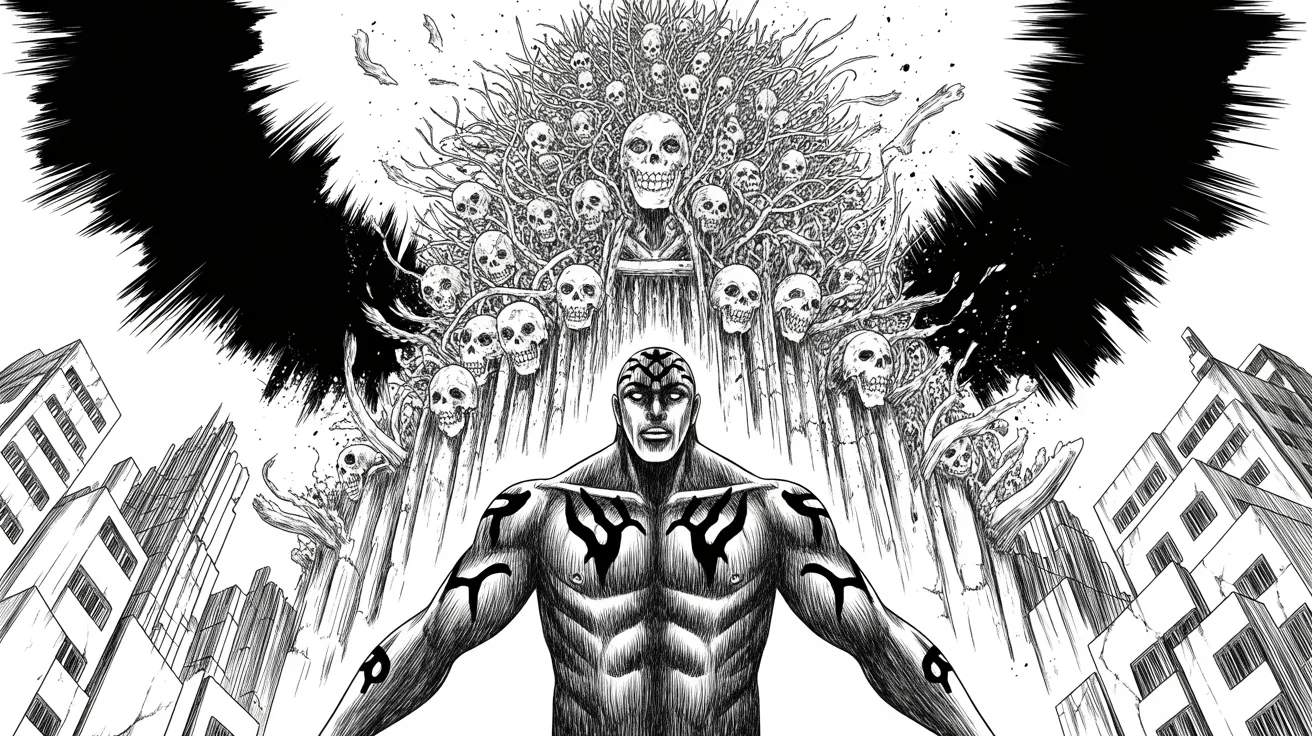
You scroll past Sukuna manga panels daily, but few notice the ink strokes that reveal his true power. Losing those details means missing half the story Gege Akutami tells. This guide dissects 15 iconic Sukuna manga panels, exposing hidden symbols, artistic choices, and narrative tricks that elevate Ryomen Sukuna beyond a typical villain. Stop skimming and start seeing the curse within the art.
Why Sukuna Manga Panels Hit Different Than Any Other Villain Art
Gege Akutami crafts Sukuna manga panels with a deliberate blend of horror and elegance. Every pose, every grin, and every splash of black ink communicates dominance. Unlike standard shonen antagonists, Sukuna does not need lengthy speeches. A single panel of him standing over shattered ground says more than entire chapters of dialogue.
The heavy use of stark contrast, jagged speed lines, and disembodied mouths creates an unsettling rhythm. When you view Sukuna manga panels side by side, you notice anatomical exaggeration—extra eyes, stretched limbs—that signal his divine, inhuman status. Akutami refuses to soften these frames; every line commits to terror.
The First Glimpse: Sukuna’s Awakening in Chapter 1
Itadori Yuji swallows the finger, and the mood shifts instantly. The panel of Sukuna’s manifestation uses a spiraling background effect that pulls the eye straight into his smirk. Black markings spread across Yuji’s face while the curse’s voice rings with amusement. This initial reveal among all Sukuna manga panels sets the visual rule: Sukuna’s presence warps the page itself.
The framing pushes Yuji’s original expression to the corner, replaced by Sukuna’s predatory grin. This deliberate layout choice makes the reader feel the possession. No other character takeover in Jujutsu Kaisen carries the same weight.
The Finger Bearer Confrontation: Horror in Sukuna Manga Panels
When Sukuna toys with the Finger Bearer at the detention center, the panels drip with sadistic playfulness. One standout frame shows Sukuna gripping the curse’s arm while smiling directly at the reader. He breaks the fourth wall visually, reminding us we are not safe spectators.
The panel’s shading uses rapid cross-hatching, a technique Akutami saved for moments of raw violence. Fingers crack, limbs twist, and the background dissolves into a void. These Sukuna manga panels don’t just show a fight; they showcase ritual humiliation.
Malevolent Shrine: The Domain Expansion That Broke the Internet
The Shibuya Incident delivers the most shared Sukuna manga panels of all time. When Sukuna activates Malevolent Shrine, the two-page spread defies normal manga structure. A massive, unsettling Buddhist shrine melts into a sea of bones and skulls. No barrier encloses the domain—an “open” Divine Technique that reflects Sukuna’s refusal to be confined.
Viz Media’s official translation of this chapter trended worldwide. The artwork merges architectural detail with abstract destruction. Horned skulls, skeletal trees, and flowing water create a perverse paradise. Akutami told a 2021 Manga Plus interview that designing Malevolent Shrine required multiple drafts to balance beauty and dread.
Fire Arrow: A Single Silent Panel That Screams Power
After decimating Mahoraga, Sukuna stands with his hand raised, a bow of flame forming from nothing. One specific Sukuna manga panel shows the arrow mid-flight with zero sound effects. The silence magnifies the impact. Jogo watches, paralyzed, and the reader feels the heat through the absence of motion lines.
This choice breaks battle manga convention. By stripping away action lines, Akutami forces the eye to linger on the arrow’s trajectory. The white space around it acts as a vacuum, consuming all noise. Few Sukuna manga panels achieve this level of oppressive stillness.
“The Moonlight’s Illumination”: Sukuna’s Poetic Cruelty
After slicing Jogo into pieces atop a skyscraper, Sukuna delivers a panel bathed in moonlight. He rests his chin on his hand, bored, while Jogo shatters into flame. The dialogue (“The moonlight’s illumination… how bright.”) comes from a thin smile that mocks the disaster below.
The panel composition places Sukuna against the full moon, turning him into a silhouette of calm amid chaos. This inverted visual—beauty in slaughter—defines why Sukuna manga panels resonate. He does not rage; he enjoys the view.
Sukuna Takes Over Shibuya: The 140-Meter Radius of Death
One of the most chilling Sukuna manga panels depicts the instantaneous aftermath of Malevolent Shrine’s activation. A wide shot shows a perfect circle carved into the Shibuya district. Buildings sliced cleanly, civilians reduced to red mist, and Sukuna standing at the center, arms spread like a conductor after a symphony.
The sheer scale, rendered with precise geometric cuts, communicates absolute power. Akutami uses a top-down perspective rarely seen in Jujutsu Kaisen, making the destruction feel clinical. This panel alone is worth the price of Volume 14.
Table: 10 Must-Study Sukuna Manga Panels and Their Hidden Meanings
| Panel Moment | Chapter | Key Artistic Detail to Notice |
|---|
| First Awakening | 1 | Swirling possession lines erase Yuji’s identity |
| Finger Bearer Disrespect | 8 | Fourth-wall-breaking direct eye contact with reader |
| Malevolent Shrine Two-Page Spread | 119 | Open barrier design without a closed shell |
| Post-Mahoraga Fire Arrow | 118 | Complete absence of speed lines for silence |
| Moonlight Insult to Jogo | 115 | Sukuna framed against the moon as a dark silhouette |
| Shibuya Massacre Aerial View | 120 | Perfect geometric destruction circle, top-down angle |
| “Rejoice, Humans” Taunt | 213 | Megumi’s soul submerged, represented by sinking shadow shape |
| Bath Ritual Panel | 216 | Ritual drowning with floating talismans, grim ritualistic calm |
| Tearing Apart Yorozu | 219 | Lateral panel break that mirrors Yorozu’s actual body split |
| Final “Heian Era” Flashback | 222 | Four-armed Sukuna rendered with ancient brushstroke texture |
Every one of these Sukuna manga panels rewards slow, intentional reading. Pause on each. The background elements, the negative space, and the ink pressure tell the hidden story.
Sukuna Manga Panels That Expose Megumi’s Suffering
When Sukuna forcibly takes over Megumi’s body, the panels chart a fall from hope to entrapment. One harrowing frame shows Megumi sinking into a black pool, his eyes lifeless. The visual metaphor of drowning inside one’s own body hits harder than any scream.
Akutami draws the “inner” Megumi with increasingly blurred lines, while Sukuna’s form sharpens. This technique physically depicts the erasure of autonomy. Analyzing these Sukuna manga panels alongside the earlier Yuji possession reveals a darker, more deliberate invasion. Sukuna learns and refines his cruelty.
The Bath Ritual: Ritualistic Dread in Sukuna Manga Panels
Volume 22 features Sukuna conducting a grotesque bath ritual to sink Megumi’s soul. The panel shows a nude Sukuna submerged with floating talismans, while a massive shadow-entity looms above the water. No fight occurs; only stillness, water droplets, and methodical horror.
These Sukuna manga panels use water reflections to double the menace. The reader sees Sukuna’s face and its warped reflection simultaneously. It serves as a visual cue for the fractured identities within Megumi’s vessel. Akutami’s use of ritual horror here nods to classic ukiyo-e ghost prints.
“A Vertical Slash That Tore the Page and Ripped Yorozu Apart”
During the Culling Game, Sukuna dispatches the incarnation of Yorozu with a vertical slash that literally breaks the manga panel border. The “crack” runs down the center of the spread, separating Yorozu’s torso from her legs. The gutter between pages becomes part of the kill.
This meta approach to Sukuna manga panels shows Akutami’s genius. The physical structure of the comic itself gets weaponized. When you hold the printed volume, your thumb sits inside that death wound. Digital readers lose this tactile effect, but the intent remains—Sukuna breaks the medium.
The Heian Era Flashback Reveals Four-Armed Perfection
Finally, the long-awaited Heian Era flashback delivers the truest form of Sukuna. The manga panel introducing his original body—four arms, twin-faced, towering over ancient sorcerers—stops time. This is the ideal version Sukuna speaks of constantly.
The shading shifts to mimic old brush and ink paintings. Akutami abandons modern shading for coarse, textured strokes. Comparatively, this makes modern-era Sukuna feel like a compressed copy. The ancient Sukuna manga panels feel mythic, as if pulled from a cursed scroll rather than a weekly magazine.
Why Manga Artists Study These Sukuna Manga Panels
Professionals dissect these frames because Akutami’s use of black ink redefines shonen density. Two-thirds of many iconic Sukuna manga panels are pure black, yet remain readable. The balance prevents visual fatigue while amplifying dread.
Speed lines never cross Sukuna’s body. Akutami reserves them for victims, keeping the King of Curses always still at the center of chaos. Emerging painters learn how to convey unstoppable force without motion blur through this purposeful contrast.
External Sources That Validate the Impact of Sukuna Manga Panels
Viz Media / Shonen Jump Official Translation (Chapters 1, 119, 213-222): The primary source for panel accuracy and dialogue.
Gege Akutami Interview, Manga Plus 2021: The creator discussed designing Malevolent Shrine as a “divine desecration” and using silence in the fire arrow scene.
Weekly Shonen Jump Issue 2018-14: Features the first color spread of Sukuna, setting the red and black color theory.
Anime News Network Art Analysis (2023): Breakdown of Akutami’s line weight evolution, noting the shift during the Shibuya Incident arc.
Shueisha’s “Jujutsu Kaisen Official Fanbook”: Contains rough sketches revealing early panel drafts of Sukuna’s Heian form and rejected domain expansion concepts.
How to Analyze Sukuna Manga Panels Like a Pro Artist
Train your eye to follow the ink density. Check where the deepest blacks sit. Usually, they pool inside Sukuna’s mouth, his markings, or directly behind his head, creating a halo of darkness. Next, observe the panel borders. When Sukuna’s power surges, borders fray or vanish. Then, locate the gaze of side characters. They rarely look at Sukuna directly. This eye-line avoidance reinforces his transcendent position.
Open your physical volume or official Shonen Jump app. Slowly page through any sequence containing these Sukuna manga panels. Take note of the rhythm: slow horror panels alternate between single-action carnage and quiet. That pacing is musical.
Frequently Asked Questions About Sukuna Manga Panels
“How does Akutami create such a distinct look in every Sukuna panel?”
Gege Akutami uses extreme negative space, anatomical distortion, and heavy ink blacks. The King of Curses almost never shares a panel as an equal; he dominates the composition, often drawn from low angles to project total superiority.
“Which Sukuna manga panel gained true legendary status among readers?”
The Malevolent Shrine double-page spread in Chapter 119 stands as the most shared. The open-barrier design, the sea of skulls, and the sheer audacity of its scale set a new bar for domain expansions in modern shonen.
How many times does Sukuna appear in full Heian-era form in the manga?
The complete four-armed, two-faced form debuts in a flashback panel during Chapter 222 and becomes central in the final arc. His true form appears sparingly, making those Sukuna manga panels feel like rare historical artifacts.
Do Sukuna manga panels differ between magazine and volume releases?
Yes. Akutami often redraws or adds shading for the collected volumes. Sukuna manga panels in the tankōbon versions have deeper blacks and refined linework, so serious analysis benefits from the volume editions over weekly scans.
Where can I read official Sukuna manga panels in high quality?
Viz Media’s digital Shonen Jump service and the printed Jujutsu Kaisen volumes deliver the crispest lines and correct ink saturation. Avoid third-party aggregator sites that compress the artwork and ruin the fine hatching.
Why does Sukuna often break the fourth wall in panels?
Akutami gives Sukuna moments of direct eye contact with the reader to reinforce his status as a being who perceives more than the third dimension. These Sukuna manga panels suggest he senses an observer, making his threats feel personally directed.
Every brushstroke contains the King of Curses.
Gege Akutami built Sukuna not just with dialogue but with ink pressure, silent frames, and backgrounds that scream. Every single one of these Sukuna manga panels carries a weight that rewards you the more you stare. The smile, the stillness, the shattered borders—they are not random. They are a visual language for dominance.
Open your volume again. Find the panel where Sukuna’s eyes narrow before a kill. Count the seconds you hold your breath. That is the power of well-crafted art. Which of these Sukuna manga panels permanently etched itself into your memory? Drop the chapter number and your favorite detail in the comments, and share this breakdown with someone who still rushes through the pages.
You Also Like To Read: What Is MAAU2324? The Straight Truth Behind This Viral Keyword